


JUVÉDERM®
Lorem ipsum dolor sit amet, consectetur adipiscing elit.
If you want to reduce facial wrinkles and lines, hyaluronic acid may be a good choice as a dermal filler because of its compatibility with the human body. JUVÉDERM
In fact, this substance is found in almost every single living thing. In humans, it acts as a network that transfers essential nutrients from the bloodstream to skin cells.
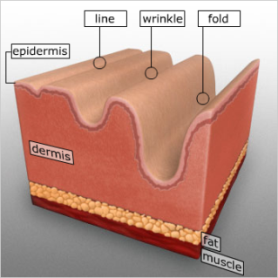
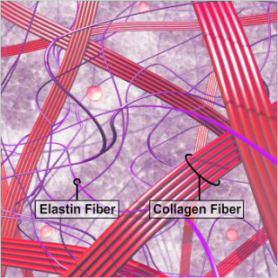
Hyaluronic acid is a natural substance found in your body. High concentrations are found in soft connective tissues and in the fluid surrounding your eyes. It’s also in some cartilage and joint fluids, as well as skin tissue. It is extracted and reformulated and now has become one of the most popular kinds of injectable fillers. If the term sounds familiar, it’s because the same substance is often injected into the aching joints of people with arthritis to ease pain and provide extra cushioning. Brand names include Captique, Esthélis, Elevess, Hylaform, Juvéderm, Perlane, Prevelle, Puragen and Restylane. Hyaluronic acid is not derived from animal sources.
When this gel is injected, it acts like an inflated cushion to support facial structures and tissues that may have lost volume or elasticity due to normal aging. It also brings water to the surface of skin to keep it looking fresh and supple.
In the last few decades, various synthetic forms of hyaluronic acid have been developed and used to correct disorders in the fields of rheumatology, ophthalmology, and wound repair. More recently, synthetic forms of hyaluronic acid are being manufactured for use in face augmentation.
Tiny amounts of hyaluronic acid are injected into your face through very fine needles. The treatments typically take less than 30 minutes, depending how many lines are treated. You can expect very little discomfort.
Assess.
First, your surgeon will listen to your desired results and then evaluate your facial appearance and skin tone, examining the areas of your face to be augmented with hyaluronic acid as a filler.
Map a strategy.
Next, the surgeon will mark strategic points on your face as guides to the appropriate injection sites for the filler as part of your wrinkle removal treatment.

Clean the area.
Your injection sites will be cleansed with an antibacterial agent. Then a topical anesthetic will be used to numb the area, particularly if you are sensitive to injections. But in some cases, the hyaluronic acid includes an anesthetic in the mixture.
Inject.
The actual injections will take just a few minutes total, and just seconds per site.
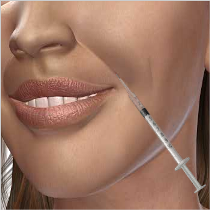
Clean up and ice.
The marks will be washed away and you will be offered an ice pack to reduce any minor and temporary discomfort. At this point you may apply makeup, but be careful not to apply pressure to the treated areas. Doing so may result in movement of the hyaluronic acid.
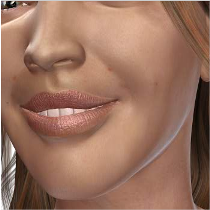
A special note about scars and deep lines. These areas will often require multiple injections to achieve your desired results. If a deeper injection is required, you’ll be offered a local anesthetic to remain comfortable. Common sites for deeper tissue fillers are the nasolabial folds and marionette lines, or to enhance fullness in the cheeks.
 You can resume most activities immediately following injection with hyaluronic acid wrinkle treatment. Just be careful not to rub the area.
Most people tolerate injectable hyaluronic acid therapy without irritation or complications. Right after your treatment, the area may be red, swollen and bruised. This tenderness should go away within a few days.
Almost everyone is a good candidate for hyaluronic therapy. It is almost always suggested as an alternative treatment to people who have a skin test for bovine collagen and develop an allergy. Some people, however, may experience:
- An allergic reaction
- Red and/or thickened nodules that arise in the injected sites. They can persist for several weeks or months.
In the long term
Before you consider having hyaluronic acid treatment, be aware that you might not achieve the results you want with just one treatment. Depending on how your body reacts to the injections you might need additional injections. Most people need at least three visits before they are completely satisfied with the results.
It’s key to know that the injections lasts from between three and five months depending on your life style, body chemistry and the rate at which you are naturally aging. To maintain their youthful appearance, most people have new hyaluronic injections two to three times a year.
If you decide not to re-treat, your appearance will return to its original condition. Wrinkles and scars will return, and plumped lips will lose volume.
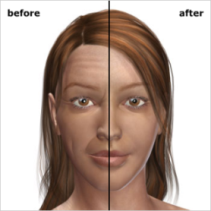
Hyaluronic acid injections can be used to improve the skin’s contour and reduce depressions in the skin due to scars, injury or lines. You can see potentially dramatic improvements for:
- Acne scars
- Cheek depressions
- Crow’s feet at the corner of your eyes
- Deep smile lines that run from the side of the nose to corners of the mouth, also known as nasolabial furrows
- Frown lines between the eyebrows
- Marionette lines at the corners of the mouth
- Redefining lip border
- Scars including burns, acne and those caused by wounds
- Smoker’s lines; vertical lines on the mouth
- Some facial scars
- Worry lines that run across your forehead
 This kind of filler treatment will help to improve your appearance temporarily, but it’s not a permanent solution and it won’t stop the aging process. Some people opt to have these injections – often called a liquid facelift – to delay the time when a surgical facelift is more appropriate. It’s a great way to see some impressive changes and improvements in your appearance until you’re ready for a permanent surgical option.
To find a qualified plastic surgeon who performs this procedure, visit the online referral service of the American Society of Plastic Surgeons (ASPS). ASPS, founded in 1931, is the largest plastic surgery organization in the world and the foremost authority on cosmetic and reconstructive plastic surgery. All ASPS physician members are certified by the American Board of Plastic Surgery (ABPS) or the Royal College of Physicians and Surgeons of Canada.

Caution: In the wrong or inexperienced hands, hyaluronic acid injections can be dangerous. In addition to seeking a doctor who is trained and qualified in facial plastic surgery, make sure the physician has specific experience with these types of injections. Even though the injections may ultimately be delivered by another healthcare professional in the surgeon’s office, it will be with the surgeon’s close supervision.